
The New Frontier of Search: Your Ultimate Guide to AI SEO

The robots are here. And they’re not just taking over our menial tasks; they’re rewriting the very fabric of how we find information online. For years, we’ve diligently optimised our websites for search engines, playing by a set of rules that, for the most part, have become second nature. But just as we got comfortable, the game has changed. Welcome to the era of AI SEO, where appearing in an AI-generated response is the new gold standard.

If you’ve recently searched for something on Google, you may have noticed a new, comprehensive answer at the very top of the page, generated on the fly by artificial intelligence. These are AI Overviews (formerly known as Search Generative Experience, or SGE), representing the most significant shift in search engine technology in over a decade. This isn't just another algorithm update; it's a fundamental change in how search results are presented.

But don’t panic and start offering fealty to our new robot overlords just yet. This guide will provide you with actionable strategies to not only survive but thrive in the age of AI-powered search. We'll delve into the nitty-gritty of AI SEO, from understanding the core principles to implementing tactical changes that'll help your content stand out. So, grab your virtual toolkit, and let's get ready to optimise for our new AI-powered reality.

AI Overview example

What in the World are AI Overviews and Why Should I Care?


Imagine walking into a library and instead of being handed a card catalogue and pointed in a general direction, you’re greeted by a knowledgeable concierge who instantly understands your query, synthesises information from multiple sources, and presents you with a concise, easy-to-understand answer. That, in essence, is what AI Overviews aim to do.

These AI-generated summaries appear at the top of the search engine results page (SERP), providing direct answers to user queries. They are designed to be more conversational and comprehensive than traditional search results, often pulling information from various websites to create a single, cohesive response. And it’s not just Google; other AI answer engines, such as Perplexity AI, are also gaining traction, further solidifying the trend towards conversational search.

So, why should you, a savvy website owner or digital marketer, care? The emergence of AI Overviews has a profound impact on click-through rates and website traffic. If a user gets a complete answer without ever having to click on a link, the traditional model of SEO—driving clicks from a list of blue links—is turned on its head. Being featured within an AI Overview is the new "position zero," a coveted spot that can significantly boost your brand's visibility and authority.

Furthermore, the nature of these AI-powered searches is changing. Users are now more likely to ask longer, more complex questions, treating the search engine like a personal research assistant. This shift requires a corresponding evolution in our SEO strategies. It’s no longer enough to rank for a specific keyword; you need to be the source of the answer.

AI SEO human focused

The Core Principles of AI SEO: It's Still All About the Humans (and E-E-A-T)


Here’s a little secret about AI SEO: it’s not as alien as it sounds. At its core, optimising for AI is about doubling down on what we should have been doing all along—creating high-quality, human-centric content. The good news is that the fundamental principles of good SEO are more critical than ever. And at the heart of it all lies a familiar acronym: E-E-A-T.

E-E-A-T, which stands for Experience, Expertise, Authoritativeness, and Trustworthiness, is the bedrock of Google’s quality guidelines. In the age of AI, its importance has been amplified. AI models are being trained to recognise and prioritise sources that demonstrate these four pillars to combat the spread of misinformation and deliver reliable answers.

Let's break down how you can infuse your website with a healthy dose of E-E-A-T:

Experience: AI wants to see that you have real-world, first-hand experience with the topics you’re writing about. This is especially crucial for "Your Money or Your Life" (YMYL) topics, such as finance and health. You can showcase experience through:

  • Detailed case studies and real-world examples.
  • Authentic product reviews and testimonials.
  • Content that is clearly written from the perspective of someone who has "been there, done that."

Expertise: Demonstrate that you are a knowledgeable authority in your field. This can be achieved by:

  • Creating comprehensive, in-depth content that covers a topic from all angles.
  • Featuring author bios with credentials, qualifications, and relevant experience.
  • Publishing original research, data, and insights.

Authoritativeness: This is about your reputation. Are you considered the go-to source of information in your industry? Build authoritativeness by:

  • Earning backlinks from other reputable and relevant websites.
  • Securing mentions in industry publications and on social media.
  • Building a strong and recognisable brand that people actively search for.

Trustworthiness: Users need to trust the information you provide. Foster trust by:

  • Being transparent about your sources and citing credible data.
  • Making it easy for users to contact you.
  • Having a secure website (HTTPS) and clear privacy policies.

In essence, AI SEO is about establishing that you are a credible and trustworthy source of information. By focusing on E-E-A-T, you’re not just optimising for AI; you’re building a better, more trustworthy brand for your human audience as well.

AI and human conversation

Your Tactical Playbook for AI Overview Optimisation


Now that we’ve established the foundational principles, let's get down to the brass tacks. Here is your tactical playbook for optimising your content to appear in AI Overviews.

Content is King, Still (But Now He's a Conversationalist)

The old adage still holds true, but the nature of "kingly" content is evolving. Here’s how to adapt your content strategy for the AI era:

  • Embrace Comprehensive, In-Depth Content: AI Overviews aim to provide complete answers. This means your content needs to be more than just a brief overview. Dive deep into topics, answer related questions, and provide a holistic resource for the user. Think of your content as a one-stop shop for a particular query.
  • Shift from Keywords to Topic Clusters: While keywords still have their place, the focus is shifting towards semantic search and topic clusters. Instead of targeting a single, narrow keyword, create a pillar page of content that covers a broad topic and then create a cluster of related articles that link back to the main page. This helps AI understand the breadth and depth of your expertise on a subject.
  • Master Natural Language and a Conversational Tone: Write the way people speak. AI-powered searches are becoming increasingly conversational, with users posing questions in natural language. Structure your content to answer these questions directly. Use headings and subheadings that mirror common queries.
  • The "Answer the Question First" Approach: This is a crucial tactic. When a user asks a question, they want the answer right away. Structure your articles to provide a clear, concise answer to the main query in the first few paragraphs. You can then elaborate and give more details further down the page. This "inverted pyramid" style of writing is highly effective for both users and AI.
AI SEO and Schema Markup

Structure is Your Friend: Making it Easy for AI to Understand


Think of structured data as a translator for your website. It’s a standardised format that helps search engines understand the content and context of your page. For AI SEO, this is a non-negotiable requirement.

The Critical Role of Schema Markup: Schema markup is a form of microdata that you add to your website's HTML. It provides explicit clues to search engines about the content's meaning. Some of the most important schema types for AI SEO include:

  • FAQ Schema: If you have a frequently asked questions section, use this schema to mark it up. This makes it incredibly easy for AI to pull your questions and answers directly into the SERPs.
  • HowTo Schema: For instructional content, this schema breaks down the steps into a clear, sequential format that AI can easily understand and display.
  • Article Schema: This helps define your content as an article, providing details such as the author, publication date, and headline.
  • Product Schema: For e-commerce sites, this schema provides detailed information about your products, including price, availability, and reviews, which can be pulled into AI-powered shopping results.

The Power of Clear Formatting: Don't underestimate the importance of good old-fashioned formatting. Use a logical hierarchy of headings (H1, H2, H3), and break up your text with bullet points, numbered lists, and short paragraphs. This not only improves readability for your human audience but also makes it easier for AI to parse and extract key information.

Technical SEO and AI SEO

Technical SEO as the Foundation: The Unsung Hero


Your brilliant content and perfectly structured data won't matter if search engines can't find and understand your website. Technical SEO is the foundation upon which your AI SEO efforts are built.

  • Crawlability and Indexability: Ensure that search engine bots can easily crawl and index your site. This means having a clean robots.txt file, a well-structured XML sitemap, and no broken links.
  • Mobile-Friendliness and Page Speed: These are non-negotiable in today's mobile-first world. Your website must be responsive and load quickly on all devices. A slow, clunky site will not only frustrate users but will also be penalised by search engines.
  • Logical Site Structure and Internal Linking: A well-organised website with a clear hierarchy of pages and logical internal linking helps search engines understand the relationships between your content and the overall structure of your site. This also helps to distribute "link equity" throughout your website, boosting the authority of your most important pages.
People also ask box

Why Featured Snippets & People Also Ask Are Your AI SEO Goldmine


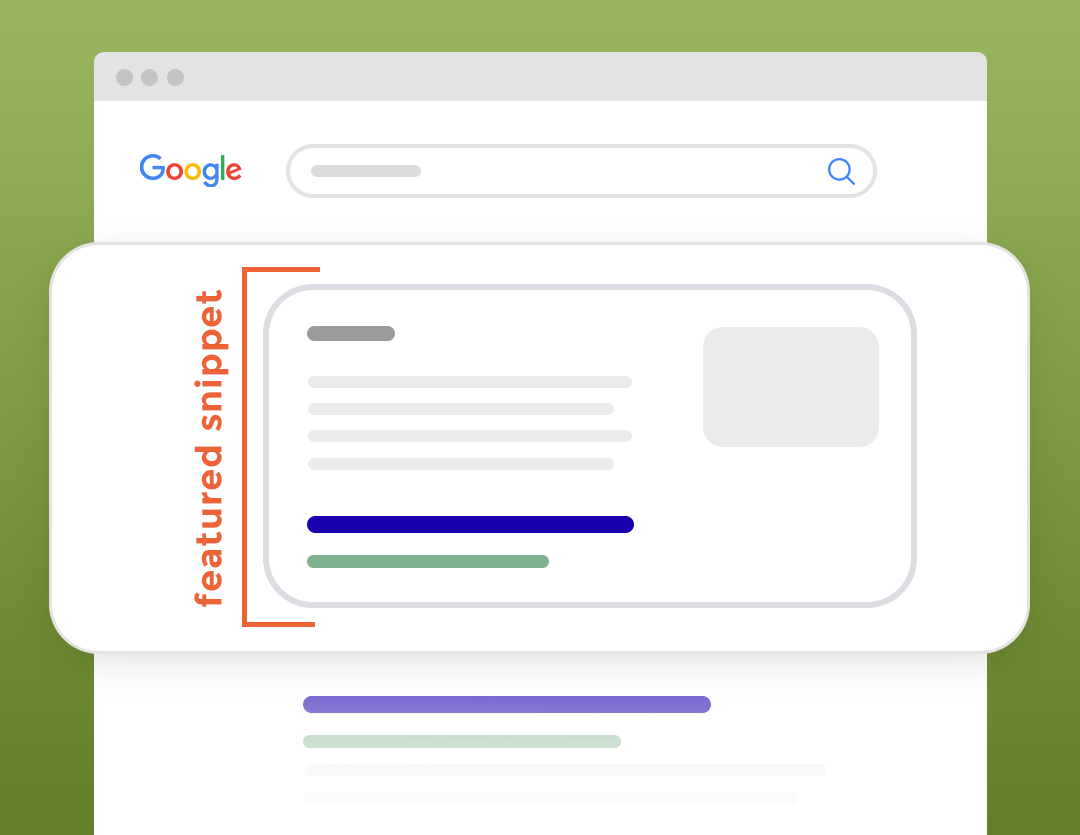
Before AI Overviews stole the spotlight, Featured Snippets and "People Also Ask" (PAA) boxes were the coveted prizes of the SERPs. It might be tempting to think they're now obsolete, but that couldn't be further from the truth. Think of these familiar features as the official training ground for AI Overviews. The content and formatting that win these spots are precisely what AI models are trained to look for.

The connection is direct and powerful. The ability of an AI to generate a coherent summary relies on finding clear, concise, and well-structured information. By optimising for Featured Snippets and PAA, you are essentially pre-packaging your content in an AI-friendly format.

Here’s how to turn these classic SERP features into your secret weapon for AI SEO:

  • Answer Questions Immediately and Concisely: The core principle of winning a Featured Snippet is to provide a direct answer to a query right at the beginning of your content. A 40-60 word paragraph that summarises the answer perfectly is a prime candidate to be lifted into both a snippet and an AI Overview.
  • Embrace Question-Based Headings: Structure your articles around the questions your audience is asking. Use H2 and H3 tags that are literal questions (e.g., "How Does E-E-A-T Affect AI Rankings?"). This creates a clear, logical flow that search engines can easily parse to find specific answers.
  • Mine PAA for Your Content Roadmap: The "People Also Ask" section is a gift from Google. It’s a literal list of what users want to know next. Use these questions to build out your content. Create dedicated sections in your article that answer each relevant PAA question, or even use them to inspire new articles altogether. By comprehensively answering these related queries, you signal immense topical authority.
  • Structure Data with Lists and Tables: Content formatted in bullet points, numbered lists, or HTML tables is incredibly easy for search algorithms to understand and extract. If you're explaining a process, use a numbered list. If you're comparing features, use a table. This structured approach is highly effective for winning snippets and being cited in AI responses.

Optimising for Featured Snippets and PAA is a low-risk, high-reward strategy. It simultaneously strengthens your traditional SEO, enhances user experience, and optimises your content to be the authoritative source for the next generation of AI-powered search.

AI Tools

Tools That Help You Track and Optimise for AI SEO


As AI continues to shape how people find answers online, keeping up with what actually works can feel like chasing a moving target. That’s where smart tools come in. Whether you're trying to figure out why your blog isn’t showing up in AI summaries or you just want to see how well your content speaks “AI,” these tools can give you the insights, structure, and edge you need. Think of them as your digital sidekicks—quietly working behind the scenes to help your content rise to the top of AI-generated responses.

  • SurferSEO – For content scoring and NLP term inclusion.

  • Frase.io – AI content briefs and optimisation.

  • AlsoAsked.com – To find real-world user queries.

  • Google Search Console – Yep, it still tells you how you’re doing.

  • Perplexity.ai – Use it to search your niche and see who’s being cited.

AI search engines

Beyond Google: Appearing in Other AI Answer Engines (like Perplexity)


While Google is the undisputed king of search, the AI-powered search landscape is becoming increasingly diverse. Platforms like Perplexity AI are gaining popularity by offering a distinct search experience, one that focuses on providing direct answers with precise citations.

So, how do you optimise for these emerging platforms? The good news is that the strategies we've discussed for Google's AI Overviews are largely applicable here as well. These platforms also prioritise high-quality, authoritative, and well-structured content.

The key takeaway is that by focusing on creating the best possible content for your users and adhering to the principles of E-E-A-T, you are not just optimising for one platform; you are future-proofing your content for the entire AI-powered search ecosystem. A strong showing in Google's AI Overviews will likely translate to increased visibility on other AI answer engines as they continue to evolve.

Future of AI

The Future of Search is Now: What to Expect in 2025 and Beyond


The world of AI and search is in a constant state of flux. What is cutting-edge today may be standard practice tomorrow. Looking ahead, we can expect to see a continued emphasis on conversational search, with voice search and multimodal search (using a combination of text, images, and voice) becoming increasingly prevalent.

The key to long-term success in this new landscape is to cultivate a mindset of continuous learning and adaptation. Stay informed about the latest developments in AI and search, be willing to experiment with new strategies, and always, always prioritise the needs of your users.

In 2025 and beyond:

  • 70%+ of searches will never result in a click (because the AI gives full answers)
  • Businesses will rely more on brand mentions in AI summaries
  • Content marketing will shift from "ranking" to "being referenced"

If you’re building content for humans, structuring it clearly, and answering real questions, you’re ahead of the curve.

embrace AI

Conclusion: Embrace the Change, Don't Fear the Robots


The rise of AI in search is not a harbinger of doom for SEO professionals and website owners. Rather, it is an opportunity to refocus on what truly matters: creating exceptional content that provides real value to users. The era of trying to "trick" algorithms with black-hat tactics is officially over. The future of SEO belongs to those who can build trust, demonstrate expertise, and provide the best possible answers to their audience's questions.

By embracing the principles and strategies outlined in this guide, you can position your brand for success in this new and exciting frontier of search. So, roll up your sleeves, start optimising, and get ready to conquer the AI-powered SERPs. The robots may be here, but with the right approach, you can make them work for you.

Top FAQs About AI SEO

What is AI SEO?

AI SEO is the process of optimising your website and content to be more visible and highly ranked in AI-powered search results, such as Google's AI Overviews and other AI answer engines. It focuses on creating high-quality, authoritative content that directly answers user queries in a conversational manner.

Is keyword research still important for AI SEO?

Yes, but it's evolving. While traditional keyword research is still valuable for understanding user intent, the focus is shifting towards broader topics and natural language queries. Instead of just targeting specific keywords, AI SEO emphasises creating comprehensive content that covers a topic in-depth and answers a wide range of related questions.

How can I track my performance in AI Overviews?

Tracking performance in AI Overviews is still an emerging field, and traditional rank tracking tools are adapting. Look for tools that specifically offer AI Overview or SGE tracking. You can also manually monitor the SERPs for your target queries to see if your content is being featured. Additionally, keep an eye on your website's overall organic traffic and engagement metrics in Google Search Console and Google Analytics.

Will AI replace the need for websites?

It's unlikely that AI will completely replace the need for websites. While AI Overviews provide direct answers, they also cite their sources. A strong online presence, anchored by a high-quality website, will remain crucial for building brand authority, providing in-depth information, and converting users. Think of AI as a new and powerful referral source.

How long does it take to see results from AI SEO efforts?

As with traditional SEO, there is no set timeline for seeing results from AI SEO. It depends on various factors, including the competitiveness of your industry, the current authority of your website, and the quality of your content. However, by consistently implementing the strategies outlined in this guide, you can expect to see gradual improvements in your visibility and organic traffic over time.

Thank You!

Like it? Share it!