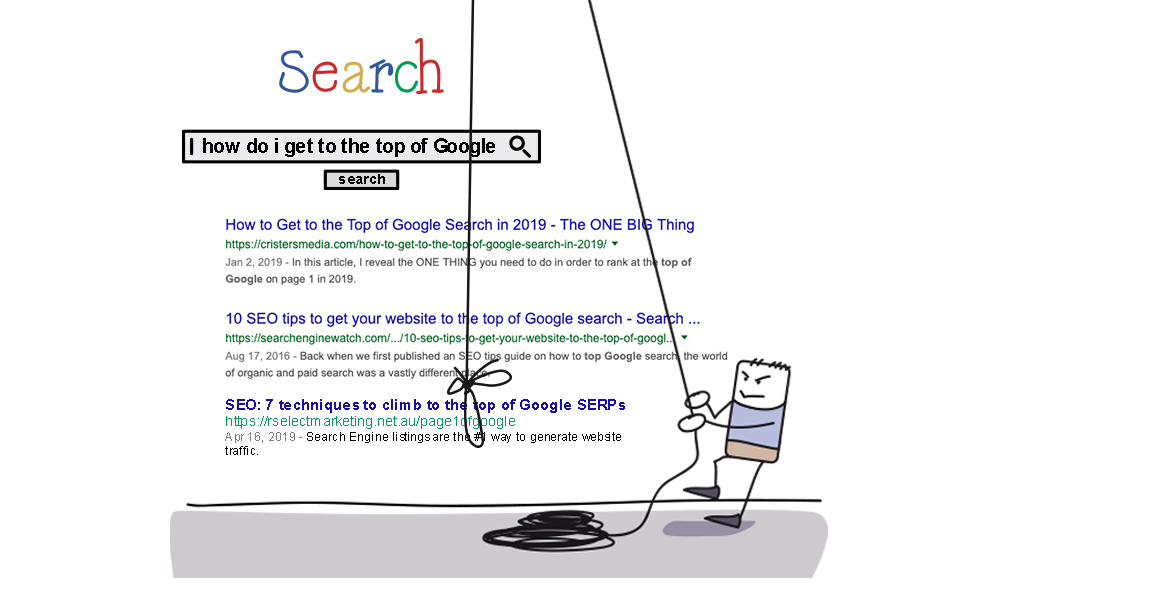
There are now more web pages than there are people on the planet. That means you can have a beautifully built website full of great products and services, and still be practically invisible — because if nobody knows you exist, nobody's finding you. Getting to the top of Google is about making it easy for search engines (and the customers behind them) to find, understand and trust what you offer. Here's how it actually works, without the jargon.
- Great, genuinely useful content is still the foundation of every top ranking.
- Target the words and questions your customers actually search for.
- Get the on-page basics right, then earn trust through quality links.
- The same solid content now helps you show up in AI answers too.
Start with great content
You've probably heard "content is king", and years on it's still true. The content of your pages is what earns your spot in the results, because it's what real people came to see. Good content does two jobs: it supplies a genuine demand — answering a question, solving a problem, showing off a product — and it's worth linking to and sharing. Content isn't only words, either. A helpful video (Google loves video), a clear photo or an infographic all count, as long as they're relevant and well described. Aim to be the most useful result for the search, not just another result.
Target the right keywords
Before you can rank for something, you need to know what your customers are typing. Put yourself in their shoes, or simply ask a few of them. Then check the real search demand with a tool like Google Keyword Planner, Semrush or Ahrefs. Many of the best opportunities are long-tail phrases — longer, more specific searches with clearer intent and less competition. Weave those terms into your content naturally, writing for people first and search engines second.
Nail the on-page basics
On-page SEO is how each page is written and structured so Google can tell what it's about. The essentials haven't changed much: a clear, keyword-rich page title; a clean, readable URL; one main H1 heading with logical H2 and H3 sub-headings; and descriptive file names and alt text on your images. These small details add up, and they make your pages easier for both people and search engines to navigate. We cover them in detail in our guide to on-page SEO techniques.
Earn trust with quality links
When other reputable websites link to yours, Google reads it as a vote of confidence — a sign your content is worth pointing to. That's why links remain a genuine ranking factor. The key word, though, is quality. A handful of links from trusted, relevant sites is worth far more than a pile of low-value ones, which can actually do harm. Earn links the honest way: publish content people want to reference, get listed in reputable directories, and build real relationships in your industry. More on link building →
Show up in AI search too
Search is changing. Alongside the classic blue links, people now get answers from Google AI Overviews and tools like ChatGPT. The good news is that the work above isn't wasted — AI answer engines pull from the same well-structured, trustworthy content that ranks in normal search. Clear headings, direct answers to real questions and accurate, credible information make it easier for AI to understand your business and cite you as a source. In other words, doing SEO properly now future-proofs you for however people choose to search.
Getting to the top of Google isn't one magic move — it's consistently doing the fundamentals well and giving it time. We can't promise a number-one spot (nobody honestly can), but we can help you build the foundations that steadily climb the rankings. If you'd like to know where you stand, a free SEO audit is a great place to start.