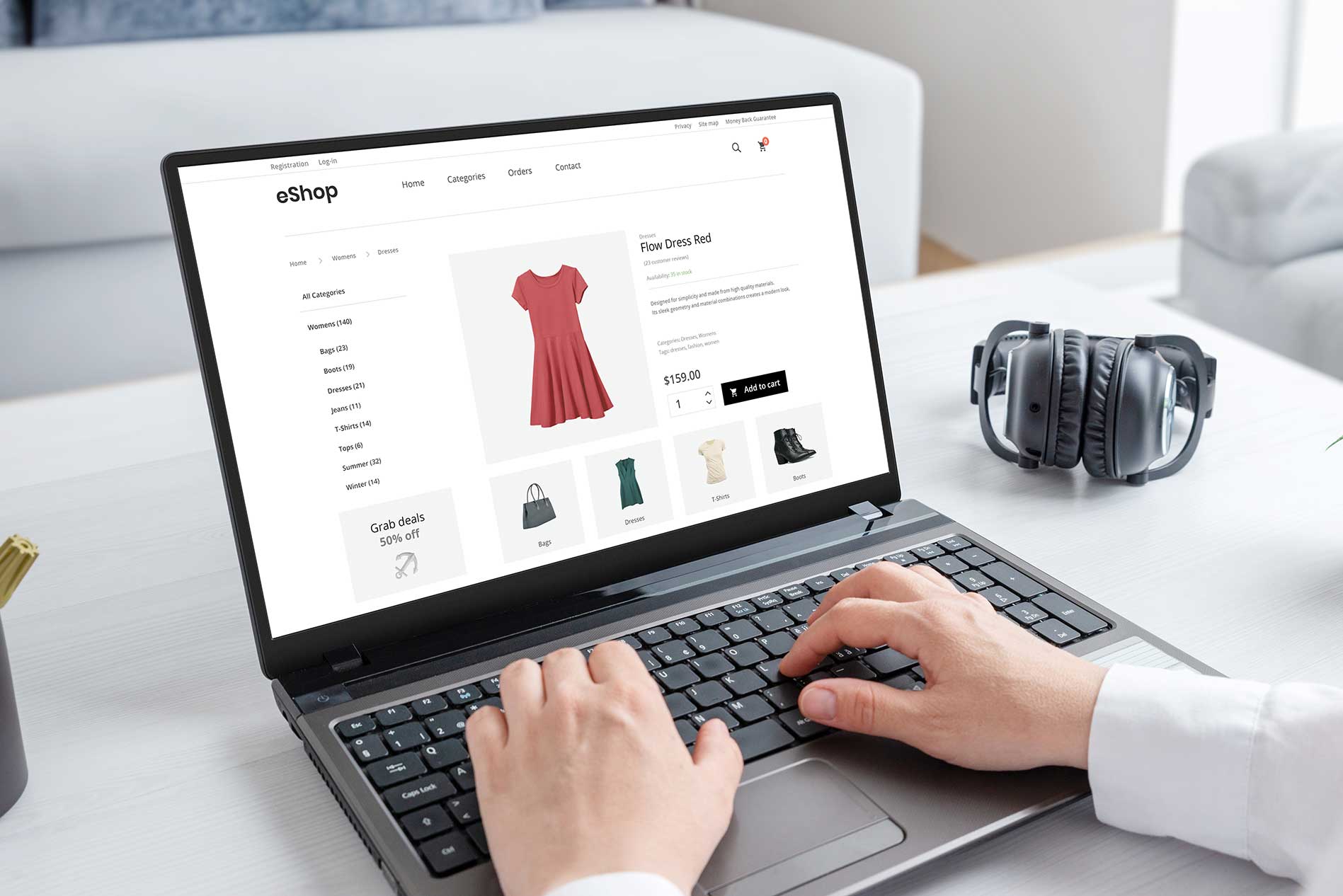
Here's the short version: e-commerce SEO is the work of optimising an online store so its product and category pages rank in search — bringing buyers to your products without paying for every click. It's the same SEO principles you'll find anywhere, applied to a store with far more pages and far more moving parts.
Running an online store means competing with everyone from the shop down the road to the marketplace giants, and paid ads get expensive fast. That's what makes e-commerce SEO so valuable: done well, it puts your products in front of people at the exact moment they're ready to buy, and unlike ads, it keeps working after you stop paying.
But optimising a store with hundreds of products is a different beast to a handful of service pages. This guide covers why e-commerce SEO is different, how to handle product and category keywords, optimising your pages, the technical foundations that matter at scale, and the content and trust signals that turn browsers into buyers.
- E-commerce SEO has to work at scale — across product pages, category pages and site structure.
- Category pages are often your biggest ranking opportunity, not individual products.
- Technical health (structure, speed, faceted navigation, schema) matters more as your catalogue grows.
- Original product descriptions and content like buying guides set you apart from every other store.
- Reviews and clear trust signals turn hard-won traffic into actual sales.
Why e-commerce SEO is different
A service business might have ten pages to optimise. An online store can have thousands, and they change constantly as products come and go. That scale creates challenges you won't hit elsewhere: duplicate content across similar products, pages for items that sell out, and navigation that can spiral into tens of thousands of filtered URLs.
The upside is huge, though. Done well, e-commerce SEO puts your products in front of people at the exact moment they're ready to buy — high-intent traffic that converts far better than someone idly browsing. Get it right and it becomes one of the most profitable channels a store has.
Product & category keywords
Shoppers search in two broad modes, and you want to capture both.
- Category-level — broader terms like "women's running shoes" or "stand-up desks". High volume, high value, and usually best served by a category page.
- Product-level — specific terms, often a brand and model, usually with strong buying intent. Served by the individual product page.
Understanding the search intent behind each tells you which page to point at which keyword. Solid keyword research maps the whole catalogue before you optimise a single page, so you're not accidentally sending two pages to fight over the same term.
Optimising product & category pages
The pages themselves have to earn their ranking. A bare grid of products won't cut it.
Category pages
Add a genuine paragraph or two of useful intro copy, not just a wall of thumbnails. Category pages target your highest-value terms, so this is often where your biggest rankings live — and the copy is what lets Google understand and rank them.
Product pages
Write original descriptions (never paste the manufacturer's), cover the details and questions buyers actually have, and give every page a unique title and meta description so they don't blur together.
Images and alt text
Great images sell products, and properly named images with descriptive alt text are a ranking signal in image search too. It's an easy win most stores skip — more in our guide to optimising website images.
Technical foundations
This is where big stores win or lose. As your catalogue grows, the technical side stops being optional.
Clean site structure
A logical hierarchy so any product is reachable within a few clicks, and so search engines can crawl the whole store efficiently.
Faceted navigation control
Manage filters and sorting so they don't generate thousands of near-duplicate URLs that dilute your rankings. It's one of the most common technical issues on larger stores.
Speed
Product-heavy pages get heavy fast. Compress images, trim the code and keep load times low — it protects both rankings and sales. More on technical SEO →
Product schema
Structured data can show price, availability and star ratings right in the search results, lifting your click-through rate — and it helps AI search understand your catalogue.
Content that brings buyers
Not everyone is ready to buy the second they search. Buying guides, comparisons and how-to content capture shoppers earlier in the journey, build trust, and give you something to rank for beyond product terms — plus something worth linking to.
A store that also teaches ("how to choose the right desk for a small home office") earns attention a bare product grid never will, and quietly guides those readers toward a purchase. It's content marketing pointed straight at a checkout.
Reviews & trust
Trust is what closes the sale. Genuine product reviews reassure buyers, add fresh keyword-rich content to your pages automatically, and can earn you star ratings in the search results that lift your click-through rate.
Combine that with clear shipping, returns and contact information, and you tick the boxes both shoppers and search engines look for. For an online store, credibility isn't a nice-to-have — it's the difference between a visit and a sale.
Turning browsers into buyers
E-commerce SEO is a big job with a lot of levers — keywords, pages, technical health, content and trust — but that's also why it's such an opportunity. Most stores get some of it right and leave the rest on the table, so getting the whole picture working puts real distance between you and the competition.
It's detailed, ongoing work, and it's easy to trip over the technical traps at scale. That's where we come in: we build and manage e-commerce SEO for Australian online stores, so you can focus on your products and customers while we make sure the right buyers keep finding you. Want to see where your store is leaking traffic? A free SEO audit is the place to start.